

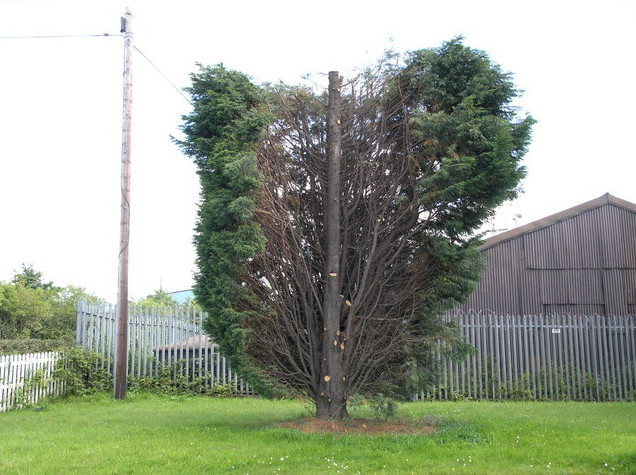
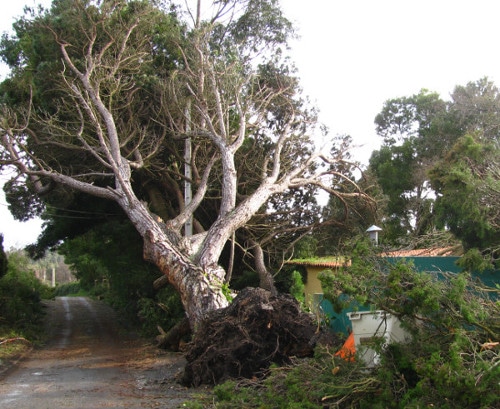
Despite the fact they are generally seen as being strong and eternal, trees can certainly end up being vulnerable in extreme weather like storms & strong winds. Fierce storms and very high winds have been seen to annihilate trees and tear even the healthiest and sturdiest trees out of the soil, sending them toppling to the ground, or onto power lines, buildings, neighbours’ gardens and vehicles.
How many times soon after a storm have you heard about storm-damaged trees & dislodged branches damaging property or blocking the road. In addition to the inconvenience and danger it additionally can cause expensive renovations.
The hardest option after a storm is not specifically how to get rid of the trees that are definitely down, that is more or less simple. The tougher choice is whether or not any of the trees left upright are salvageable.
Certain trees that have been moderately damaged in the storm may well pose a potential future risk and may have to be cut down and took away to avoid placing property and people at risk in months or even years ahead.
Other trees maybe conserved by being pruned back, with their most cracked parts being ‘severed’ exactly like how a surgeon would amputate a gangrenous limb. Others will need to be staked down with guy wires or supported with various other supports up until they are able to re-develop the root system they need to stand on their own.
If a storm has caused trees to fall on premises, our tree experts can be relied upon to clear away the injured trees safely, quickly and efficiently to allow the construction teams access to the property to begin restorations on the affected buildings and power cables.
 Every one of these kinds of problem causes an unique prognosis for the trees’ potential survival, but making a prognosis is a job best left to a fully trained arborist. An unqualified nonprofessional is far more liable to overlook a small detail that may differentiate one verdict from another, such as noticing the splinters from a crown twist but missing the slight lean which signifies that the roots also snapped.
There are basically six forms of storm damage which a tree can not usually stand up to:
Every one of these kinds of problem causes an unique prognosis for the trees’ potential survival, but making a prognosis is a job best left to a fully trained arborist. An unqualified nonprofessional is far more liable to overlook a small detail that may differentiate one verdict from another, such as noticing the splinters from a crown twist but missing the slight lean which signifies that the roots also snapped.
There are basically six forms of storm damage which a tree can not usually stand up to:
- Blowovers – this is where the whole tree comes down.
- Stem Failures – this is where the trunk of the tree splits above the earth, leading to the trees crown to fall or to lean strongly while the lower part continues to be standing normally.
- Root Failures – is when the roots of the tree tear beneath the earth, leading to the tree bending or swaying dramatically.
- Branch Failures – is where one or more limbs of the tree break off.
- Crown Twists – is when the trunk of the tree rotates enough to splinter, but stays standing. This occurs most frequently on trees with very lopsided crowns. The whole crown basically becomes a weather vane in a storm, turning to follow the wind in a way that the trunk can’t.
- Lightening Strikes – When lightening strikes the tree gets burned and electrocuted, but stays standing, at the moment. Lightening strikes have a many secondary effects including opening a large amount of surface area up to pests and vermin and massive water loss, so a tree hit by lightening is always at a considerably increased danger to drop despite the fact that it survived the original storm.